Selected high-resolution photographs
Documentation guide
A plain-language guide to visual and 3D documentation before important physical things change.
This guide explains when documentation may be useful, what a documentation package can include, what 3D documentation can and cannot do, and how Wessmark Studio keeps professional boundaries clear.
What documentation means
Documentation creates a clearer record before context, condition, location, or ownership changes.
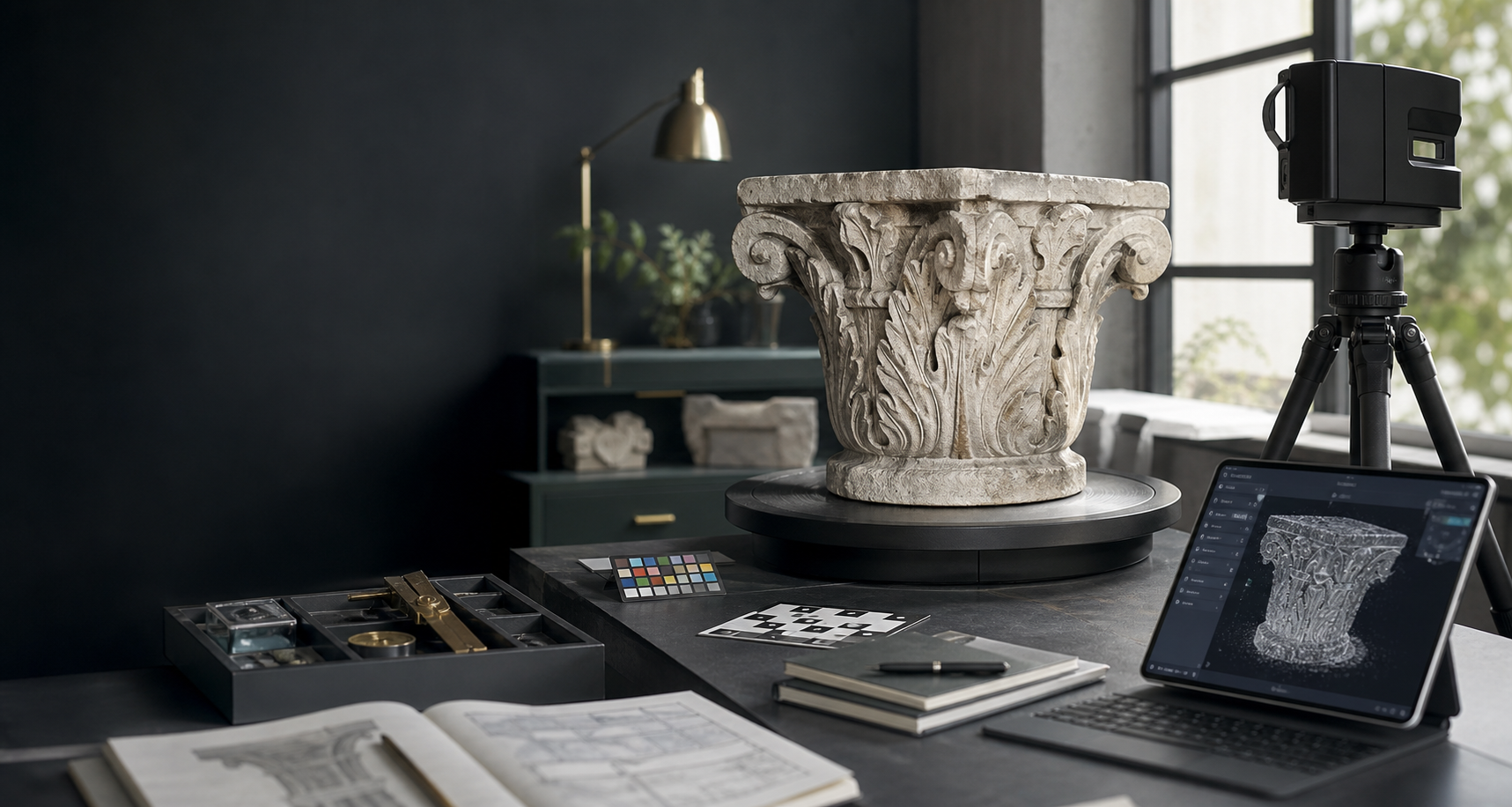
A Wessmark Studio documentation project may combine visual records, organized files, and plain-language notes so owners and qualified professionals can understand what was captured later. The exact deliverables depend on project fit, intended use, access, object type, and scope.
Detail images of visible features, marks, inscriptions, surfaces, or condition
Scale and context references where appropriate
3D model files where appropriate
File inventory and organized folder structure
Documentation report
Read First notes or usage guidance
When documentation may be useful
Useful before important changes, decisions, or handoffs.
Before restoration or repair
Create a record of visible condition, surface details, geometry, or identifying features before work changes the object or site.
Before movement or transfer
Document selected objects before they are moved, sold, shipped, stored, donated, distributed, or placed into a new context.
Before estate context is lost
Record selected estate items before location, ownership, family knowledge, or item groupings change.
Before public or heritage change
Capture monuments, plaques, architectural details, carvings, or public features before alteration, repair, weathering, or relocation.
Before insurance records are updated
Build clearer client records that may support later conversations with insurance professionals without deciding coverage or claims.
Before specialist review
Provide better reference material for a fabricator, restorer, appraiser, insurer, gallery, municipality, architect, or heritage professional.
What a package may include
A useful package is organized, explained, and scoped.
A documentation package is not just a folder of unexplained files. It may include a report summary, selected images, detail images, 3D files where appropriate, a file inventory, and notes about limitations or professional boundaries.
View Sample Documentation PackageReport summary describing what was documented and why
Selected images for overview and reference
Detail images for marks, features, visible condition, or construction details
3D files where appropriate for the agreed purpose
File inventory so records can be understood later
Limitations and professional boundary note
Professional boundary
Wessmark Studio provides professional visual and 3D documentation. It does not provide appraisals, authentication, legal advice, insurance claim decisions, engineering certification, industrial metrology, or conservation treatment recommendations. Documentation may support the work of qualified professionals, but it does not replace them.
How to start
How to start
Send enough context for Wessmark Studio to understand the object, site, collection, or detail; where it is located; what may happen next; the timeline; the intended use of the records; and whether another professional is involved.
Include if known
- What is being documented?
- Where is it located?
- What may happen next?
- When is documentation needed?
- Who will use the records?
- Is a restorer, appraiser, insurer, estate professional, municipality, gallery, architect, or fabricator involved?
This public guide is separate from Wessmark Studio’s internal business manual and working templates.
It is intended for client education only and does not include private planning material, internal working documents, internal search, or manual downloads.
Deciding whether to inquire
Have something that should be documented before it changes?
Before contacting Wessmark Studio, it helps to know what object, site, detail, or collection is involved; where it is located; what may happen next; the approximate timeline; the intended use of the record; and whether another professional is involved.
If those details are still uncertain, a short first message is enough to start a practical conversation.